River Lea
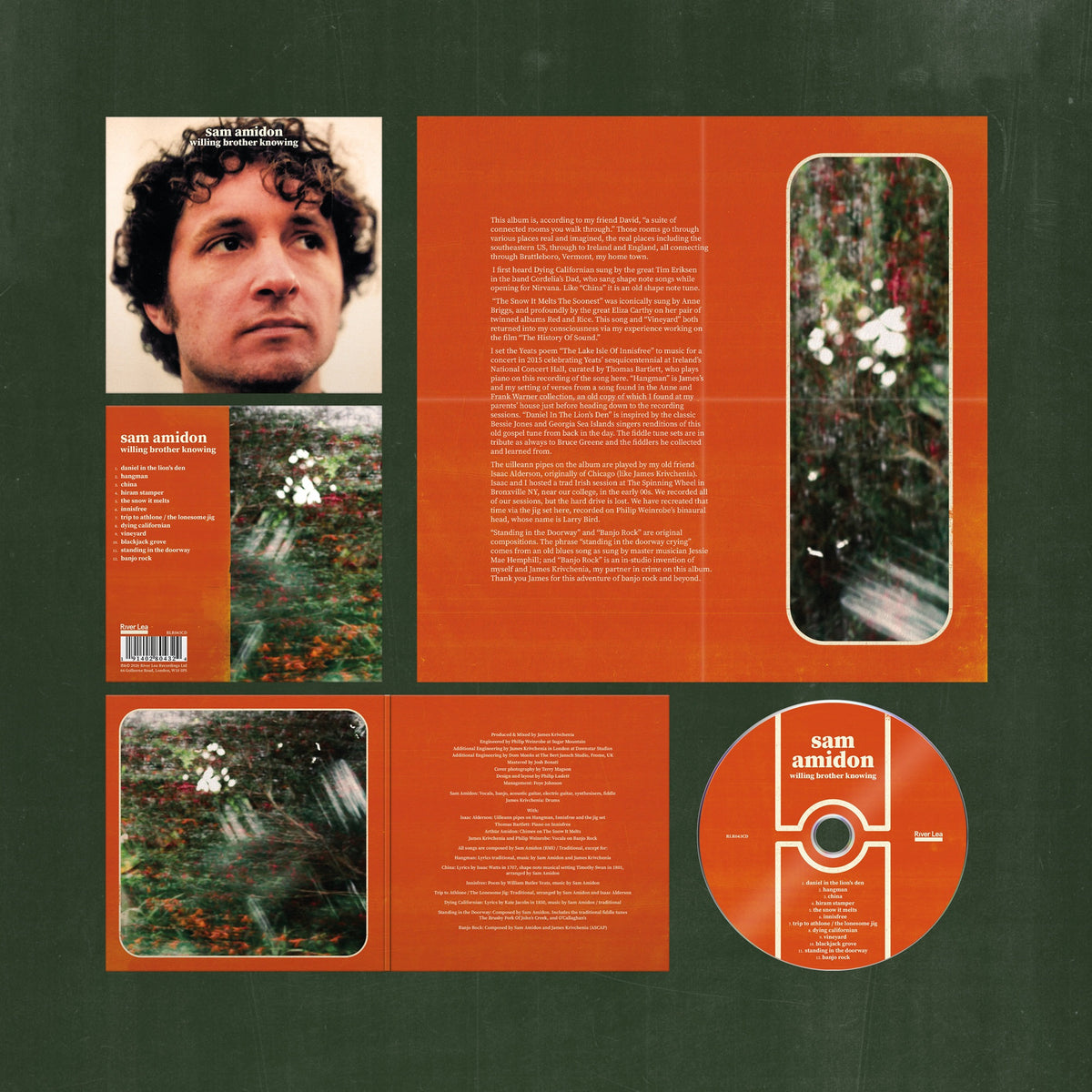
Amidon, Sam - Willing Brother Knowing
Amidon, Sam - Willing Brother Knowing
Couldn't load pickup availability
Willing Brother Knowing, Sam Amidon’s ninth album, begs the question: Is there an alternative universe where Jimi Hendrix was a teenager in Vermont, in the 90s, and also was obsessed with Irish fiddling while growing up in a family contra dance band at a time when punk-folk was a thing that the kids would have been into, in addition to shape note singing? Because sure, Willing Brother Knowing is a folk LP. It is made of songs and lyrics drawn from folk traditions. But Willing Brother Knowing is also rock and roll; a rock quilt made from folk fabrics.
It makes sense when you consider that Sam Amidon is one of the most in-demand collaborators in indie rock today from collaborations with Bon Iver to The National, Beth Orton, Dijon and more as well as serving as Music Advisor and singing coach for the film The History of Sound, starring Paul Mescal and Josh O’Connor.
Yes, Willing Brother Knowing is an album with fiddle tunes, both Irish and Appalachian, and yes, there are old hymns sometimes sung as folk ballads, like “Vineyard,” and another shape note hymn, “Dying Californian,” a gorgeous meditation on mortality by the Amidon’s Rock Unit: guitars, synths, Krivchenia’s loose and groovy cymbals and slightly restrained snare. But it is the synthesis of these things that shape the album. The album concludes with a blowout, “Banjo Rock” – “James’ and my manifesto!” as Amidon describes it – but its centerpiece is “Standing in the Doorway”, with that old blues line “Standing in the doorway crying”.
It describes a threshold, a place between places – the infrastructure for crossing from one world to the next. Amidon fashions his own lyrics here, and his fiddle keens through pain before bringing the piece home through two old tunes, one American, one Irish. It’s as if he is using his beginnings to point ahead. Which is maybe what folk music helps us do, or maybe just does.
Share